Fire Extinguisher Buyer’s Guide: How to Choose the Right Fire Extinguisher (And Avoid Costly Mistakes)
If you’re searching for a fire extinguisher, you’ve probably noticed something frustrating:
There are a lot of options — and almost all of them look the same.
Red can. Pressure gauge. Pin and hose.
But when a real fire breaks out, looks don’t matter. Performance does.
This guide walks you through how to choose the right fire extinguisher, what most people overlook, and why many homeowners, drivers, and business owners are rethinking traditional extinguishers altogether.
Fire Classes Explained (The Basics Everyone Should Know)
Before choosing a fire extinguisher, it helps to understand fire classes:
Class A – Ordinary combustibles (wood, paper, fabric)
Class B – Flammable liquids (fuel, oil, grease)
Class C – Energized electrical equipment
Class D – Combustible metals (magnesium, sodium, titanium)
Class K – Cooking oils and fats (commercial kitchens)
👉 The National Fire Protection Association provides a detailed breakdown here: NFPA Fire Extinguisher Types

Why Fire Extinguisher Choice Matters More Than You Think
Fires don’t just happen in homes.
They happen in:
- Vehicles and engine compartments
- Garages and workshops
- Commercial buildings and job sites
- Warehouses, barns, and storage areas
- Kitchens, offices, and mechanical rooms
And when they do, the damage often comes from two things:
1. The fire itself
2. The extinguisher that was supposed to stop it
Choosing the wrong extinguisher can mean:
-It doesn’t work when you need it
-It stops the flames but destroys what you were trying to save
-It requires constant service you didn’t keep up with
The Most Common Fire Extinguisher Types (And Their Limitations)

1. Dry Chemical Fire Extinguishers (Class A,B,C)
This is the most common extinguisher on the market.
Used on: Class A, B, and C fires
Pros:
- Widely available
- Inexpensive upfront
- Rated for multiple fire classes
Cons most people don’t realize:
- Powder will compact and clog over time, causing the extinguisher to be ineffective
- Requires regular monthly inspections and yearly professional servicing
- Leaves a corrosive mess that can ruin engines, electronics, and equipment
- Single-use: once discharged, it must be serviced or replaced
Many people only discover these issues after a fire.

2. Water & Water Mist Fire Extinguishers (Class A)
Best for: Class A fires only
Pros
- Cooling effect
- No chemicals
Cons
- Dangerous on electrical fires
- Useless on flammable liquids
- Limited applications

3. Foam Fire Extinguishers (Class A,B)
Best for: Class A & B fires
Pros
- Good on flammable liquids
- Some cooling effect
Cons
- Leaves residue
- Not safe on energized electrical equipment
- Cleanup required

4. Carbon Dioxide (CO₂) Fire Extinguishers (Class B,C)
Best for: Class B & C fires
Pros
- No residue
- Good for electrical equipment
Cons
- Not effective outdoors
- Won't work on ordinary combustibles
- Requires precise aim
- Risk of reignition

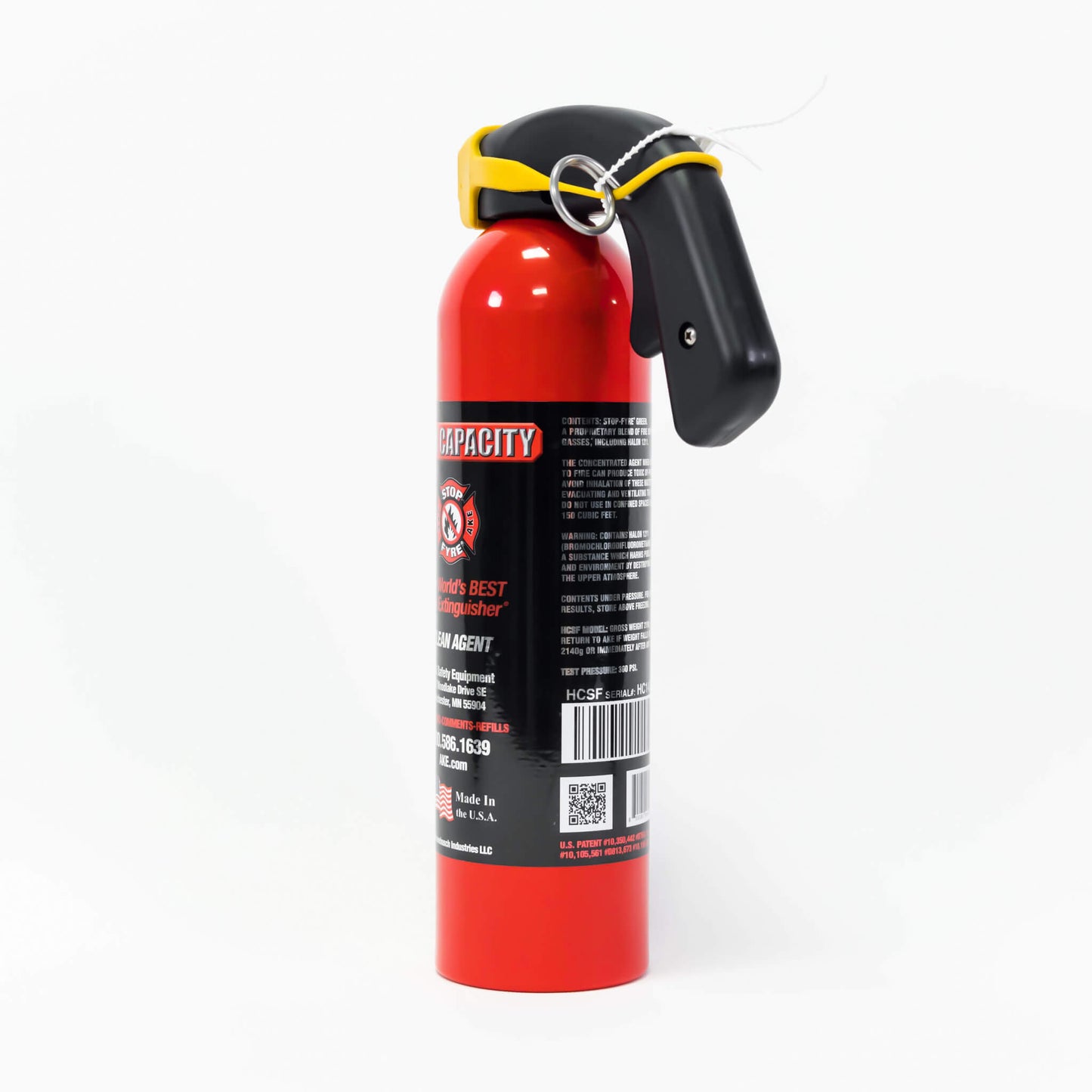
5. Clean Agent Fire Extinguishers (STOP-FYRE®)
Best for: Class A, B, C, and K fires
This category is where STOP-FYRE® Handhelds stands out.
Instead of powder, foam, or water, clean agent extinguishers use gas-based suppression that interrupts combustion without damaging surroundings.
Why Clean Agent Extinguishers Are Gaining Popularity
Clean agent extinguishers are increasingly used in:
- Vehicles and engine compartments
- Manufacturing
- Garages and workshops
- Homes, cabins, and RVs
- Commercial spaces
- Server rooms
Because they solve the biggest complaints about traditional extinguishers.

What Makes STOP-FYRE® Different
STOP-FYRE® was designed to fix what frustrates people about fire extinguishers.
STOP-FYRE® advantages:
- No monthly or yearly servicing required
- Multi-shot capability
- No mess or clean up
- Non-corrosive
- Spray in the vicinity — gas expands to suppress fire
- Compact and lightweight
- So easy a 4-year-old can use it
- Backed by a Lifetime No-Hassle Guarantee®
Instead of maintaining, shaking, servicing, and replacing extinguishers — you install STOP-FYRE® and forget about it until it’s needed.