Cheap vs Premium Fire Extinguishers: What’s the Real Difference?
Written by: AKE Safety Equipment
Reviewed by: AKE Fire Safety Team
Last updated: June 4, 2026
Quick answer: Cheap fire extinguishers can provide basic fire protection, but premium fire extinguishers often offer better durability, easier use, less mess, lower long-term maintenance hassle, and stronger protection for expensive equipment. For farms, shops, vehicles, garages, and businesses, the real cost of a fire extinguisher is not just the price on the shelf. It is what happens when the fire starts, the extinguisher discharges, and you are left with either protected equipment or a costly mess.
Walk into almost any big-box hardware store and you can find a traditional fire extinguisher for under $30. It has a red body, a pressure gauge, and an ABC rating stamped on the label. At first glance, it looks like it should do the job.
But fire extinguishers are one of those products where the difference between cheap and premium shows up the moment you actually need it. That is a terrible time to find out what you traded away to save a few dollars.
Key Takeaways
- Cheap fire extinguishers may meet basic needs, but lower-cost materials can mean less durability over time.
- Traditional dry chemical extinguishers often require inspections, service, recharges, and cleanup after use.
- Dry chemical powder can leave behind a messy, corrosive residue that may damage engines, electronics, wiring, painted surfaces, and equipment.
- Premium fire extinguishers can offer better ease of use, cleaner discharge, stronger long-term value, and less hassle.
- STOP-FYRE® is compact, lightweight, multi-shot, non-corrosive, maintenance-free to operate, and backed by a Lifetime No-Hassle Guarantee®.
Table of Contents
- Cheap vs Premium Fire Extinguishers: What Is the Real Difference?
- Cheap vs Premium Fire Extinguisher Comparison
- 1. Low-Cost Materials vs Components Made to Last
- 2. Routine Servicing vs No Servicing Required to Operate
- 3. Corrosive Powder vs Non-Corrosive Agent
- 4. One-Shot Discharge vs Multi-Shot Capability
- 5. Bulky and Complicated vs Compact and Easy to Use
- Which Fire Extinguisher Is Best for Farms, Shops, and Equipment?
- Frequently Asked Questions
Cheap vs Premium Fire Extinguishers: What Is the Real Difference?
The biggest difference between a cheap and premium fire extinguisher is not always the fire rating printed on the label. The real difference is usually found in durability, reliability, ease of use, maintenance requirements, cleanup, corrosion risk, and long-term value.
A cheap traditional dry chemical extinguisher may be fine for basic, minimum-level protection. But if you are protecting a tractor, combine, shop, work truck, garage, barn, business, or expensive equipment, the cheapest option on the shelf may not be the best investment.
Before you grab a low-cost traditional dry chemical extinguisher, here is what you need to know.
Cheap vs Premium Fire Extinguisher Comparison
| Feature | Typical Cheap Dry Chemical Extinguisher | Premium STOP-FYRE® Fire Extinguisher |
|---|---|---|
| Agent type | Dry chemical powder | Clean-agent fire suppression gas |
| Cleanup after use | Messy powder residue | No powdery mess or cleanup |
| Corrosion risk | Can be corrosive to equipment and components | Non-corrosive |
| Use style | Usually one-shot discharge | Multi-shot capability |
| Maintenance | Often requires routine inspections, servicing, and recharging | No monthly or yearly servicing required to operate |
| Ease of use | Bulky and intimidating | Compact, lightweight, and simple to use |
| Best fit | Basic household backup | Farms, shops, vehicles, equipment, garages, barns, and businesses |
| Long-term value | Lower upfront cost, but possible service and cleanup costs | Higher upfront investment with long-term protection and less hassle |
1. Low-Cost Materials vs Components Made to Last
Cheap fire extinguishers are typically built to hit a low price point. Many use basic cylinders, lower-cost valve components, and budget pressure gauges. They may meet minimum requirements when manufactured, but the real question is how well they hold up over time in the places people actually store them.
Think about where your extinguisher lives. In a shop. In a tractor cab. In a dusty barn. In a work truck. On a piece of equipment that vibrates all day. Around heat, humidity, dirt, chemicals, and temperature swings.
Premium extinguishers are designed for people who expect more than “good enough.” Better materials, stronger construction, and a more durable design can matter a lot when the extinguisher is protecting equipment you cannot afford to lose.

2. Routine Servicing vs No Servicing Required to Operate
The sticker price on a cheap extinguisher can be deceptive. A $30 fire extinguisher may look like the budget-friendly choice, but many traditional pressurized extinguishers come with ongoing maintenance, inspection, and recharge requirements.
Depending on the extinguisher type and use, traditional fire extinguishers may require:
- Regular visual inspections
- Professional maintenance or service
- Recharge after use
- Internal inspections at required intervals
- Hydrostatic testing or replacement when required
Those extra steps add time, hassle, and cost. For a home, that may be annoying. For a farm, shop, truck fleet, or business with multiple extinguishers, it adds up fast.
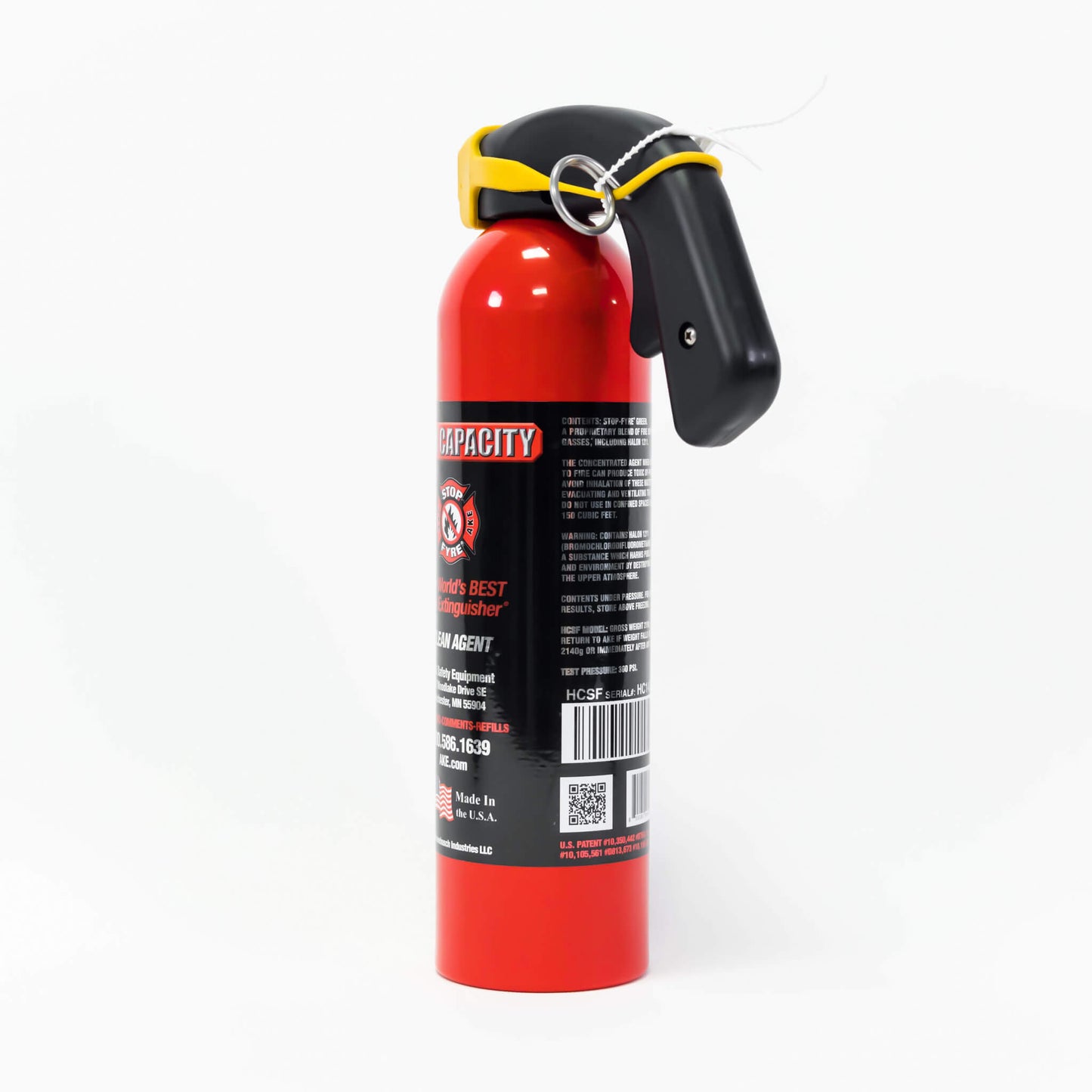
STOP-FYRE® High Capacity is designed to remove that routine service headache. There is no monthly or yearly servicing required to operate, no scheduled recharge, and no third-party service visit needed for the unit to be ready.
That matters because the best fire extinguisher is not the one you meant to service. It is the one that is ready when the smoke starts.

3. Corrosive Powder vs Non-Corrosive Agent
This is one of the biggest differences for farmers, equipment operators, fleet managers, mechanics, shop owners, and anyone protecting high-value assets.
Standard ABC dry chemical extinguishers commonly use a powder agent. That powder may help put out a fire, but it can leave behind a messy residue that gets into engines, wiring, electronics, bearings, belts, controls, paint, and tight spaces.
After a fire, that powdery mess can become another problem. Cleanup takes time. Corrosion risk increases. Sensitive components may be damaged. In some cases, the cleanup and repair bill from the extinguisher discharge can become a major headache of its own.
STOP-FYRE® uses a clean-agent fire suppression gas. It is non-corrosive and leaves no dry chemical powder behind. For equipment owners, that means you are not trading fire damage for cleanup damage.
Why no-mess fire protection matters
- Less cleanup after discharge
- No powder packed into engines or electronics
- No corrosive dry chemical residue
- Less risk of damaging the equipment you were trying to save
- Less downtime after a fire scare
4. One-Shot Discharge vs Multi-Shot Capability
Many traditional budget extinguishers are designed like a one-and-done tool. Once you squeeze the handle, the unit can discharge quickly. If the fire flares back up or you need to hit a second spot, you may not have much left to work with.
That is a problem in real life because fires do not always behave politely. A small engine fire can flare back up. A shop fire can spread. A combine, tractor, truck, or piece of equipment can have more than one hot spot.
STOP-FYRE® offers multi-shot capability. You can spray, stop, and spray again if needed. That gives you more control in a stressful situation, especially when seconds matter and the fire is still moving.
See STOP-FYRE® in action to see how clean-agent fire protection works in real fire demonstrations.

5. Bulky and Complicated vs Compact and Easy to Use
When a fire breaks out, the last thing you want is a heavy, clunky extinguisher that feels confusing or intimidating. Panic is real. Smoke is real. Heat is real. You want fire protection that is simple enough to grab and use fast.
Traditional dry chemical extinguishers can feel bulky, messy, and awkward, especially for someone who has never used one before.
STOP-FYRE® keeps things simple. It is compact, lightweight, and easy to use. You do not have to be a firefighter to use it with confidence. Spray in the vicinity of the fire and let the clean agent expand into the area to help knock the flames down.
Which Fire Extinguisher Is Best for Farms, Shops, and Equipment?
For farms, shops, trucks, tractors, combines, garages, barns, and expensive equipment, the best fire extinguisher is one that is easy to access, easy to use, powerful enough for the job, and clean enough that it does not create a second wave of damage after the fire is out.
That is where premium fire protection makes sense. You are not just buying an extinguisher. You are protecting machinery, buildings, tools, vehicles, uptime, and peace of mind.
STOP-FYRE® is built for the equipment you cannot afford to lose:
- Multi-shot so you can spray, stop, and spray again
- Non-corrosive so you are not coating equipment in damaging powder
- No mess or cleanup like traditional dry chemical extinguishers
- No monthly or yearly servicing required to operate
- Compact and lightweight so it is easy to keep close by
- Backed by the Lifetime No-Hassle Guarantee®
Cheap fire extinguishers may look fine hanging on the wall. But the real test comes when there is smoke, heat, and only seconds to act. That is when durability, ease of use, no-mess cleanup, and multi-shot performance start to matter.
Shop STOP-FYRE® handheld fire extinguishers and protect what matters before the fire starts.
Frequently Asked Questions
Are cheap fire extinguishers as effective as expensive ones?
Not always. A cheap fire extinguisher may provide basic protection, but the real difference often shows up in durability, ease of use, cleanup, maintenance, and long-term cost. Many traditional dry chemical extinguishers also require routine inspections, servicing, and recharging over time, which can add extra hassle after the purchase.
What is the best fire extinguisher to buy for a farm or tractor?
For farm equipment, choose fire protection that is easy to grab, easy to use, and tough enough for real-world conditions. Look for an extinguisher that can handle common farm fire risks, uses a non-corrosive agent, leaves no damaging mess, and gives you more control if flames flare back up.
STOP-FYRE® by AKE Safety Equipment is built for farmers who want clean fire protection for tractors, combines, trucks, shops, barns, and equipment they cannot afford to lose. See STOP-FYRE® fire extinguishers.
What is the difference between a rechargeable and disposable fire extinguisher?
Disposable fire extinguishers are typically replaced after use or once they reach the end of their service life. Rechargeable extinguishers can usually be refilled by a qualified service provider after use or during required maintenance.
STOP-FYRE® gives you another advantage: multi-shot capability. That means you do not have to dump the entire unit all at once. You can use what you need, stop, and spray again if needed.
Does dry chemical fire extinguisher powder damage equipment?
It can. Traditional dry chemical powder leaves behind a messy residue that is difficult to clean and can be corrosive to engines, electronics, wiring, painted surfaces, and other sensitive equipment.
That is one of the biggest reasons many farmers and equipment owners choose STOP-FYRE®. It uses a clean, non-corrosive agent that leaves no damaging powder behind, so you are not trading fire damage for cleanup damage.
Is a small fire extinguisher enough for a garage or shop?
A small extinguisher may be enough for a very small, contained fire, but garages and shops often have bigger risks: vehicles, fuel, batteries, tools, equipment, paint, chemicals, and electrical hazards.
For garages, workshops, barns, and outbuildings, it is smart to choose fire protection with more capacity, easy handling, and clean-agent performance. STOP-FYRE® is compact enough to keep close by, but powerful enough to help protect the equipment and property you depend on.
Why do premium fire extinguishers cost more?
Premium fire extinguishers can cost more because they are designed to solve problems that cheap extinguishers may not address, such as cleanup, corrosion, durability, ease of use, service hassle, and long-term reliability. The higher upfront cost can make sense when the extinguisher is protecting expensive equipment, vehicles, buildings, or business operations.
What is the best no-mess fire extinguisher?
A clean-agent fire extinguisher is often the best choice when you want fire protection without dry chemical powder. STOP-FYRE® uses a clean, non-corrosive agent that leaves no messy powder behind, making it a strong option for farms, shops, vehicles, garages, barns, equipment, and sensitive areas.
Does STOP-FYRE® require annual servicing?
No. STOP-FYRE® does not require monthly or yearly servicing to operate. It is designed to be a long-term, low-hassle fire protection option and is backed by AKE’s Lifetime No-Hassle Guarantee®.
Do Not Wait Until You Need It to Find Out It Fails
Cheap extinguishers may look fine hanging on the wall, but fires do not care what you saved at checkout. When the heat is rising and seconds matter, you want something that is simple, clean, reliable, and ready.
STOP-FYRE® is engineered for the equipment, property, and people you cannot afford to lose.