How Long Does a Fire Extinguisher Last If You Never Use It?
The one in your kitchen. The one in your garage. The one zip-tied under the seat of your truck. When did you last actually look at it?
Most people buy a traditional fire extinguisher, mount it somewhere visible, and consider themselves covered. And for a while, they are. But at some point that extinguisher stops being reliable protection and starts being a false sense of security.
The question isn't really whether your extinguisher has been used. The question is whether it will work when you need it. Those are two very different things.
So How Long Does a Fire Extinguisher Actually Last?
The honest answer is: it depends on the type and whether it's been properly maintained.
Most standard dry chemical fire extinguishers, the kind found in homes, garages, vehicles, restaurants, and small businesses, have a rated lifespan of 10 to 12 years. Disposable units should be fully replaced at that mark. Rechargeable units can last longer, but only with documented professional servicing every 6 years and hydrostatic pressure testing every 5 to 12 years depending on type.
CO2 and pressurized water extinguishers carry a shorter minimum inspection window, around 5 years before professional evaluation is required.
Here's the part most people miss: that 10–12 year window assumes proper maintenance along the way. Without it, the real lifespan is shorter and far less predictable.
What Goes Wrong When It Just Sits There
The widespread assumption is that an untouched extinguisher stays in the same condition it left the factory in. It doesn't. Several things quietly work against it from the day it's installed.

1. Pressure loss
Every pressurized extinguisher relies on seals and o-rings to hold its charge. Those components degrade with age and include hardening, cracking, or losing elasticity and pressure will drop gradually over years without any external sign. The gauge may still show green while the unit is no longer capable of a full discharge.

2. Powder Clumping
Standard dry chemical extinguishers use ammonium phosphate powder as their active agent. Over time, that powder settles and compacts inside the cylinder. In high-vibration environments like vehicles, equipment, even kitchens with heavy foot traffic, compaction happens faster. A compacted charge can block the internal tube and prevent the extinguisher from discharging at all, or at a fraction of its rated output.

3. Valve and seal degradation
Rubber and plastic components age regardless of use. Heat cycling, cold temperatures, and simple time cause internal components to fail in ways that aren't visible from the outside.

4. Corrosion
Garages, kitchens, workshops, boat storage, and vehicle interiors are not climate-controlled laboratories. Humidity, temperature swings, grease, and chemical exposure all accelerate corrosion on cylinder bodies and internal components.
None of these failure modes come with a warning. The unit looks the same. The gauge might still read full. You'd never know there was a problem until you go to use it in an emergency.
What the Rules Actually Say
The National Fire Protection Association's standard NFPA 10 sets the requirements for fire extinguisher maintenance. Even for a unit that has never been discharged, it requires:
Monthly visual inspections: pressure gauge check, physical condition, accessibility
Annual professional inspections: conducted by a certified fire safety technician
6-year internal maintenance: for rechargeable dry chemical units, the cylinder must be fully emptied, internally inspected, refilled, and recharged
Hydrostatic testing every 5 to 12 years: the cylinder itself is pressure-tested to confirm structural integrity
For businesses, these requirements are mandatory and enforced. For homeowners and vehicle owners, they're strongly recommended and almost universally ignored.
The result is a lot of fire extinguishers that are technically present but practically unreliable.
Where This Matters Most: Your Home, Your Vehicle, Your Business

In your home
The extinguisher mounted in your kitchen or laundry room was probably installed when you moved in. If you don't know when it was purchased or when it was last serviced, you don't know whether it's reliable. A kitchen fire like grease on the stove or an appliance malfunction, moves fast. The three seconds it takes to grab and discharge your extinguisher will either contain the fire or it won't. Whether the unit is actually ready determines which outcome you get.

In your vehicle or RV
Extinguishers stored in vehicles experience some of the harshest conditions possible. This includes extreme summer heat, deep winter cold, and constant vibration. Temperature cycling alone is hard on seals and pressure. An extinguisher that rides in a truck bed or an RV storage compartment for three years without inspection has been through hundreds of temperature cycles. It may be fine. It may not be.

In your small business
In restaurants, auto shops, woodworking shops, warehouses, etc., fire risk is higher and the cost of a failure is greater. Commercial settings are also subject to inspections, which means an out-of-compliance extinguisher isn't just a safety risk, it's a liability and a potential violation.

In your boat or watercraft
Marine environments are among the most corrosive possible. Salt air and humidity accelerate degradation significantly. The Coast Guard has specific requirements for marine fire extinguishers, and most recreational boaters are not meeting them.

In your garage or shop
With power tools, flammable liquids, paint, and solvents, garages have high fire risk and are typically the least climate-controlled space in a home. An extinguisher sitting on a shelf through years of summer and winter cycles needs more attention than most homeowners give it.

Even When It Works, Dry Chemical Creates a Mess
Here's something worth knowing before you assume a dry chemical extinguisher is the right tool for every situation: what happens after a successful discharge.
Ammonium phosphate powder is the active agent in ABC dry chemical extinguishers, which is extremely corrosive. When discharged in a kitchen, it coats appliances, countertops, cabinetry, and food surfaces. In a vehicle, it gets into upholstery, vents, and electronics. In a workshop or garage, it covers tools, equipment, and wiring.
The cleanup is extensive and the corrosive residue can damage sensitive electronics, finishes, and components even after visible powder is removed. In some scenarios, the chemical damage from a discharge can exceed the fire damage itself.
This isn't a reason to avoid using a fire extinguisher when you need it. It is a reason to understand what you're working with and whether there are better options for your specific situation.

A Different Kind of Fire Extinguisher
Most of the problems above trace back to two things: the nature of dry chemical powder and the maintenance burden of traditional pressurized systems. Both are worth reconsidering.
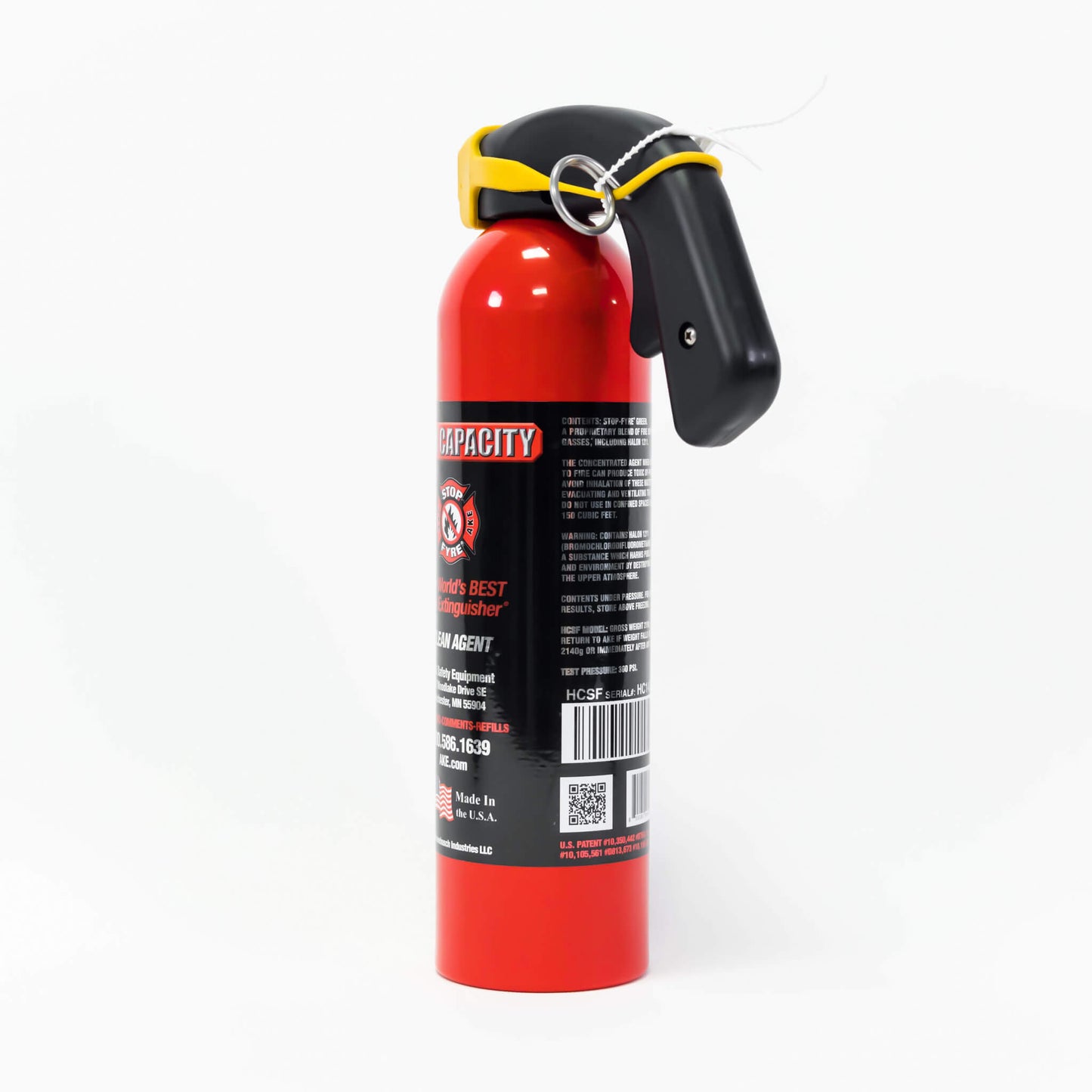
STOP-FYRE® takes a different approach. Instead of dry chemical powder, it uses a proprietary blend of fire suppression gases. Because there's no powder, there's nothing to clump, settle, compact, or block. Because it's a gas-based system, the specific degradation mechanisms that make dry chemical extinguishers unreliable over time simply don't apply in the same way.
STOP-FYRE® doesn't require routine annual maintenance or professional inspections to remain reliable. It leaves no corrosive residue after discharge which matters in a kitchen, a vehicle, or anywhere with electronics or sensitive equipment. It's a multi-shot unit, meaning it doesn't have to be fully emptied in a single use. And it comes with a Lifetime No-Hassle Guarantee™. Customers have units purchased over 30 years ago still in working condition.
For homeowners, vehicle owners, small business owners, and anyone who wants fire protection that's actually ready without a maintenance calendar, it's worth the investment.
Frequently Asked Questions
Do fire extinguishers expire if you never use them?
Yes, effectively. While most don't have a printed expiration date, typical dry chemical units have a rated service life of 10–12 years and that assumes proper maintenance along the way.
An unmaintained extinguisher can become unreliable well before that. STOP-FYRE® is different: customers have units purchased over 30 years ago still in working condition, never serviced, because there's no powder to degrade and no pressure seals that require routine recertification.
Can a fire extinguisher lose pressure on its own?
Yes. Seals and o-rings degrade with age and temperature cycling, and pressure can drop gradually without any visible sign until the gauge drops or the unit fails to discharge with adequate force.
STOP-FYRE®'s design eliminates this as a routine concern. It doesn't require professional recertification to stay ready, and it's backed by a Lifetime No-Hassle Guarantee™, meaning if it ever leaks or fails, it's replaced.
How do I know if my fire extinguisher still works?
For a standard dry chemical unit: check the gauge, inspect the physical condition, verify the manufacture date, and shake it to confirm the powder is still loose and hasn't compacted. When in doubt, have it professionally inspected.
With STOP-FYRE®, there's no powder to check and no compaction to worry about. As long as you can feel agent in the unit, it's ready to go.
What's the difference between a disposable and rechargeable fire extinguisher?
Disposable units have plastic valve assemblies and cannot be serviced. Rechargeable units have metal valve assemblies and can be refilled and recertified with professional service, but require regular maintenance to remain reliable.
STOP-FYRE® is rechargeable and multi-shot which means it can used on multiple fires. Refills are handled directly through AKE with no need to locate a local service provider.
Is a fire extinguisher in a hot car or truck still safe to use?
Possibly, but heat and temperature cycling degrade seals and pressure over time and a unit that's spent years in a vehicle without inspection may have lost pressure or have compromised components.
STOP-FYRE® is rated for operating temperatures from -40°F to 120°F and is built to handle the temperature extremes that vehicle storage creates, making it a stronger choice for anyone who keeps an extinguisher in a truck, SUV, RV, or work vehicle.
How much does it cost to service a fire extinguisher?
A standard dry chemical refill typically runs $25–$50. Add annual professional inspections, 6-year internal service, and hydrostatic testing over a unit's life and the total cost of ownership adds up significantly. Learn more about refills in this blog: Where to Refill a Fire Extinguisher Near You (and Why You Might Not Need to Ever Again)
STOP-FYRE® requires no routine maintenance, no annual professional inspections, and no scheduled service intervals. The refill cost after use is straightforward, and the Lifetime No-Hassle Guarantee™ means you're not on the hook for replacement costs if the unit ever fails.